How they wanted to make mood charts, but got a psychotherapy bot that helps with panic attacks.
💡 Idea: Psychotherapy bot with virtual pet and personal diary
🤖 Bot: @koshka_knopka_bot
💸 Monetization: freemium model (opportunity to buy advanced bot functionality)
💁♀️ Heroines:
Elena Nikulina, 22 years old. The year 2020 was a breakthrough year in terms of areas of development - she became interested in trying herself in no-code, product management, hr products and bots. She created her first bot to improve onboarding and pre-boarding of employees.
Julia Zyatchina, 24 years old. Studied at a medical school, and then worked in a marketing agency. Had several projects of her own.
Background
Have you ever wondered what would happen if you digitized your finances and mood levels in a graph? And the creators of the bot, Yulia Zyatchina and Elena Nikulina, wondered about it. This is what one of the first graphs looks like and the origin of the idea @koshka_knopka_bot👇
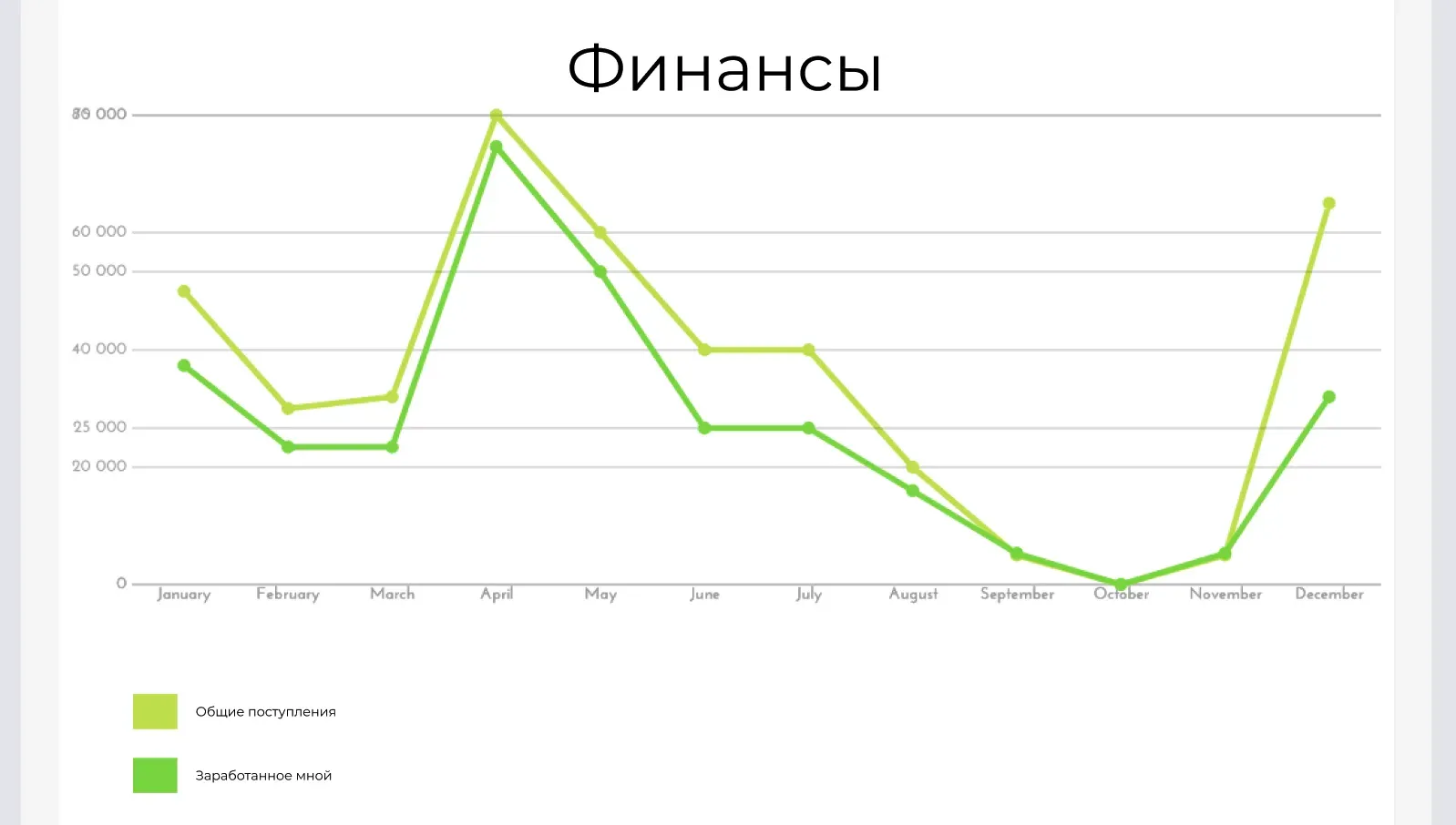
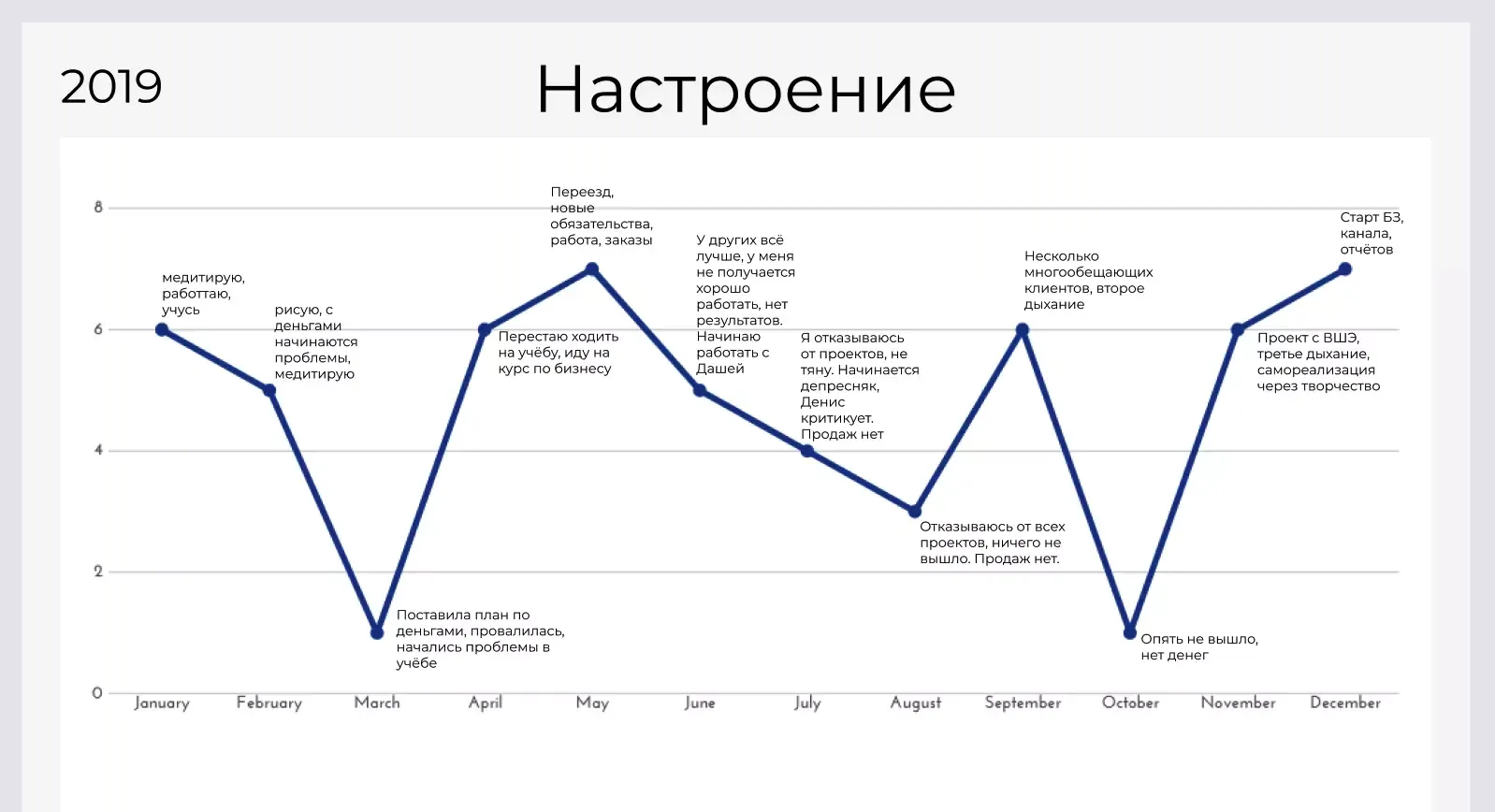
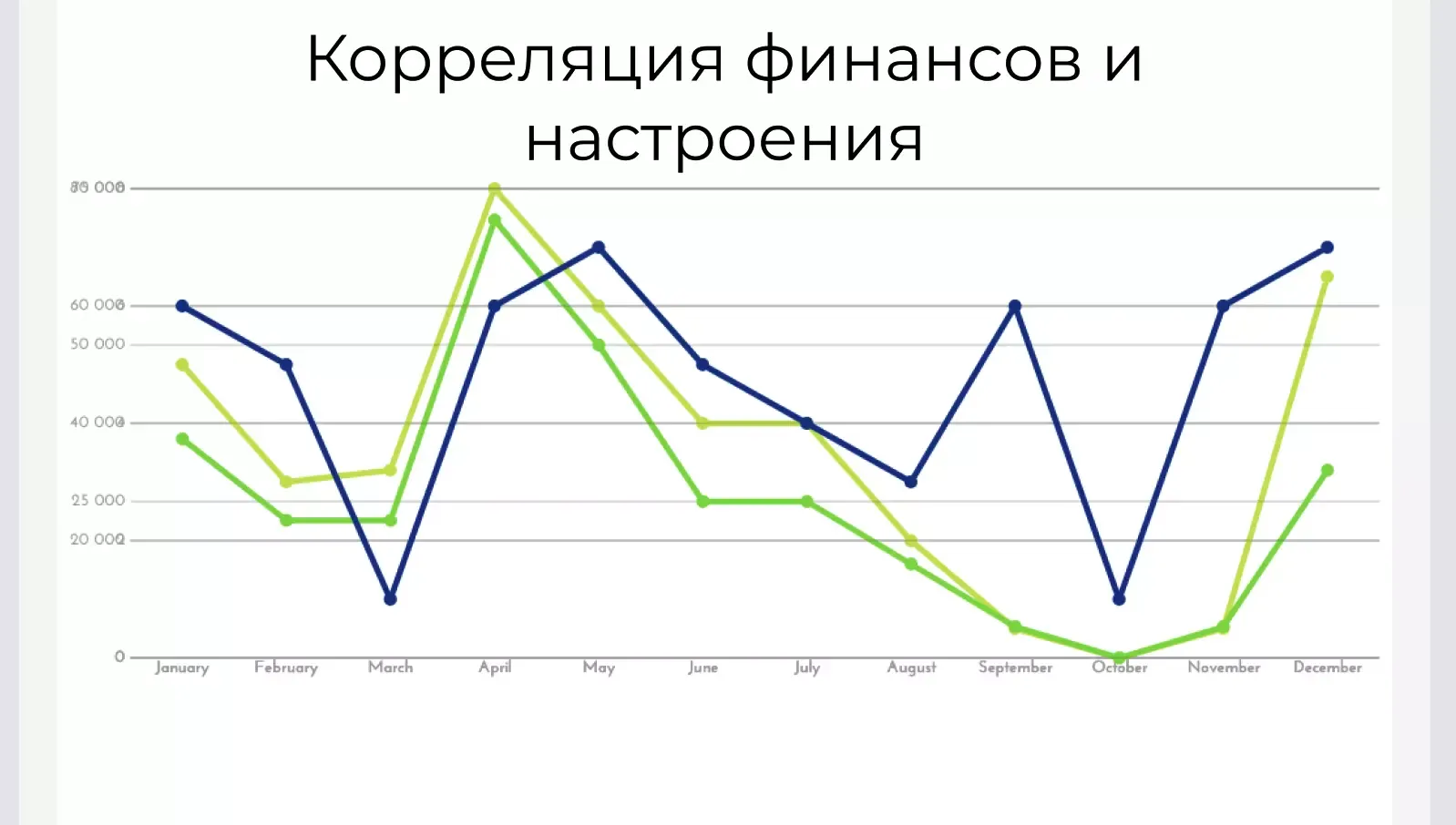
Yulia and Elena originally conceived the project as an opportunity to receive an automated infographic of their condition. The plan was to create a small number of basic practices - an anxiety diary, a gratitude diary and an evening checkup. The creators of the bot divided up the responsibilities and got down to business 🙂 And then there was more. They realized that they needed to add practices for dealing with anxiety and an emotion diary. And now they are keeping the focus on improving data collection and visualizing it in the evening checkup. And they're promising to please with a big update soon with a new webapp feature!
How does it work?
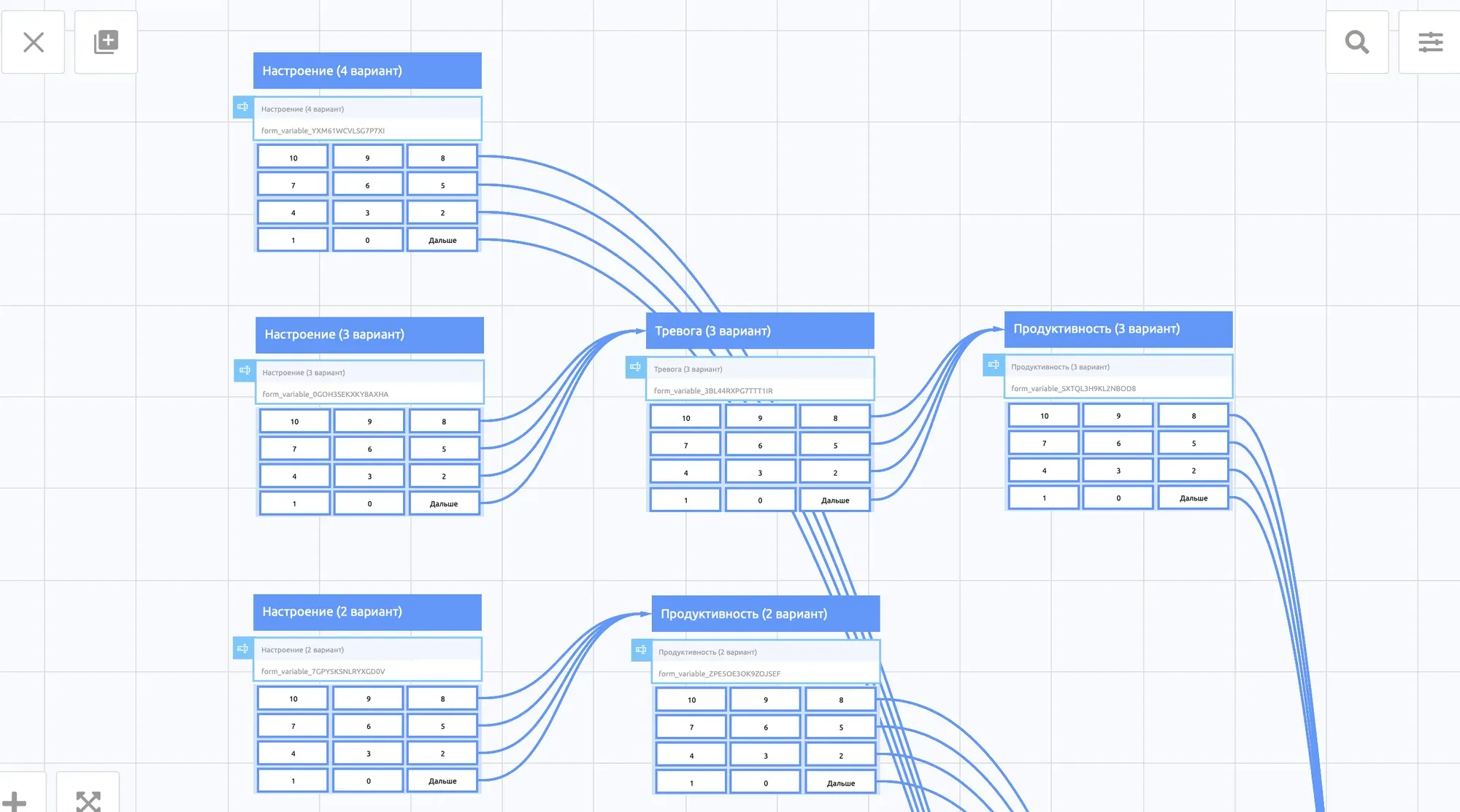
In addition to the exercises given by psychotherapists as homework and practices for panic attacks, the bot also features a weekly infographic of one's condition. A person takes an anxiety, productivity and mood survey each day. At the end of the week, he gets a chart. This is especially handy if you go to psychotherapy. You don't always have the opportunity to answer the therapist honestly about how you've really been feeling. Plus, remembering the past week can be quite difficult and time consuming from a session. So far, the creators of the bot have made do with no investment in development beyond paying for the subscriptions to services that are needed to keep it running. But they are already preparing a presentation for investors.
The hardest part was getting feedback. Yulia and Elena do not yet fully understand the user's journey and what he may not like. Now they are implementing at the end of each practice the ability to leave feedback. They have also come to the conclusion that as soon as a person feels better, he stops giving time to the bot. This is understandable, but at the same time, I would like the user to be interested outside of their depressive and stressful states as well.
About the bot structure
The bot consists of 8 blocks - mostly psychotherapeutic practices - and various scripts with which regular newsletters are sent. The bot was literally built in two weeks. Then it was already improved and brought to the form that it is now. The creators tried to describe the practices themselves in a dialogue format with the user - as if you were communicating with a psychologist or a close friend. The bot is great for this kind of interaction! We all know how boring it can be to sit down to do some exercises - and here the good-natured cat gradually asks you questions, and everyone is happy.
By the way, about the cat and partly the main character of the bot. Yulia and Elena found it important to reach a new level of contact with the user, something more than just another bot on Telegram. And since the audience is mostly girls and empathic young guys, they decided to create something cute, but also caring: the cat was the best option.

An interesting task, from a technical point of view, was the collection of data and further creation of mood graphs. In order to implement infographics, the creators connected a mixture of technologies: puzzlebot; integromat and google sheets (working with data); figma and a small but lifesaving chart plugin (for creating and designing tables). Now all the work on the analysis of data and creating infographics is done manually: with integromat the data comes in tables, then they are sorted by individual users, chart is connected and it picks up the data of a particular person. And the charts are sent to the dialogs 🙂 .
In the process of creating the mailing lists Julia and Elena encountered a difficulty in that the users live in completely different parts of Russia, and it is convenient for them to take the survey every evening at completely different times. So, 20 custom daily dispatches were developed according to the monitored indicators and the selected time zone. Users are added to categories (according to their choice) and the mailing is configured.
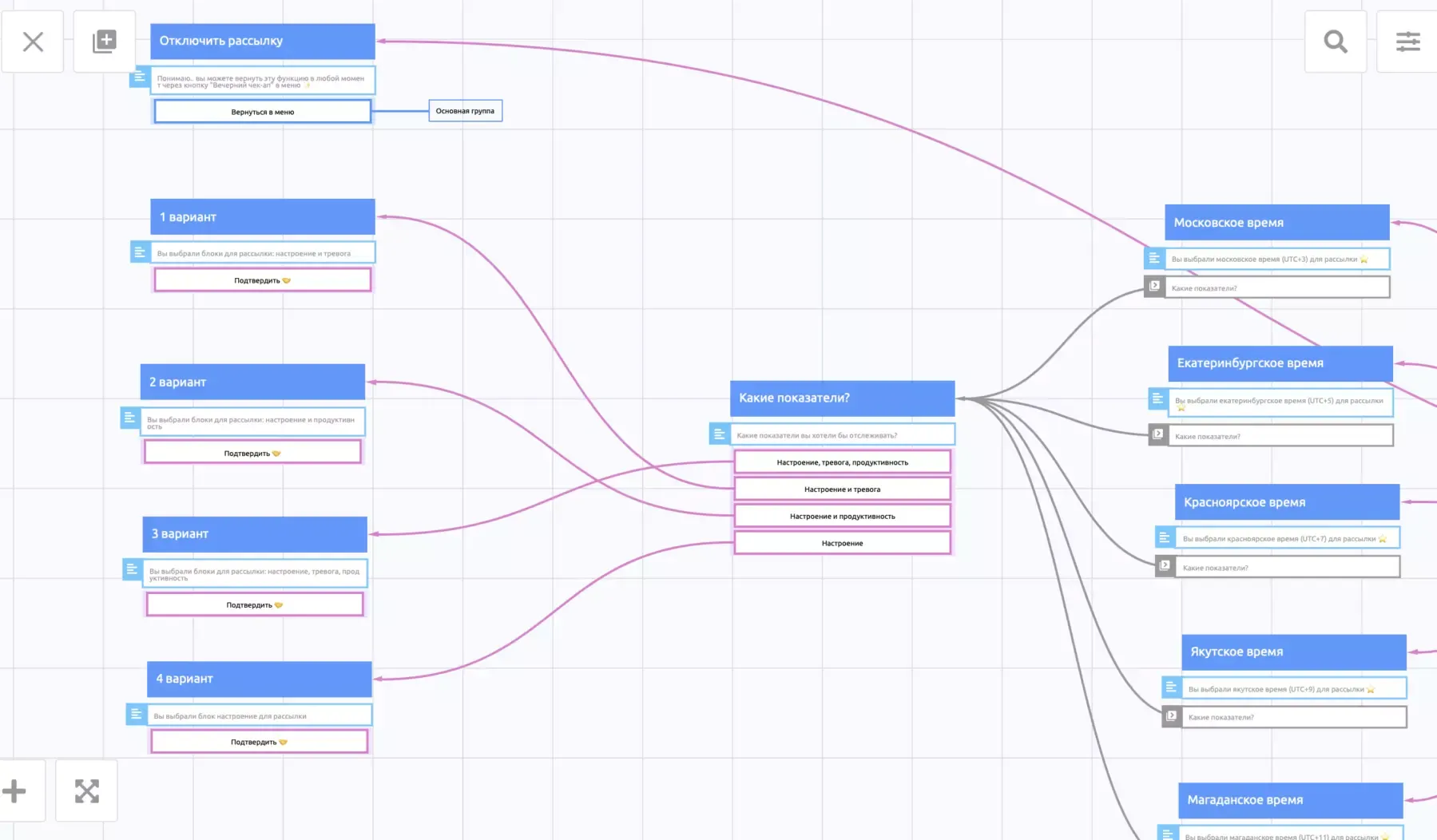
"Here I want to say thank you to PuzzleBot service for the fact that the guys have created a really handy tool, from working with which you get pleasure 😄 (no kidding). It's nice to see the functionality expanding and being able to make your bot even more user-friendly in the process of creating the product. It's also nice to be assured that your ideas can be quickly and painlessly implemented."
Elena Nikulina, Co-Founder
About promotion, monetization and plans
Yulia and Elena are planning to monetize through the freemium model. Besides the development of a web app for the Russian market, the creators of the bot plan to enter the English-speaking market. At the moment, they promote themselves with the help of publications in various fem communities and sites like VC.
"Discoveries: we've figured out how you can make panic attack exercises available at any time. There is a pattern that has been formed: in times of anxiety, a person goes on messengers to write to their loved ones about what is happening to them. The difficulty is that not everyone has someone to write to, and not all people know how to behave when a panic attack occurs. This is where there is a dire need for this section of the bot. At the end there is the obligatory question about whether the person was helped by the practice. The panic attack emergency section has been used 227 times. Of those, 167 times users responded that the practice helped and alleviated the symptoms. This is an amazing result. Our idea of helping people in such intensely stressful situations."
Yulia Zyatchina, Co-Founder