
Sometimes people believe they've automated everything with artificial intelligence. Then their bot sends a dubious offer to a "cold" contact all on its own, and you get the feeling that somewhere along the way the automation took a wrong turn.
Written by Daniil Kotlyarov, a developer of Telegram bots and mini apps and author of the @gamedevpublisher channel.
Below is a message from an AI marketer who wrote to me after seeing my post in one of the chats, along with my reaction to it. After that come a few more screenshots of our conversation with my comments.

In fact, you're being messaged by a bot that:
doesn't understand context
doesn't keep track of the goal of the conversation
can't go beyond its script
starts asking pointless questions at the slightest deviation.
Then I decided to run an experiment and asked it to show me a seahorse emoji.

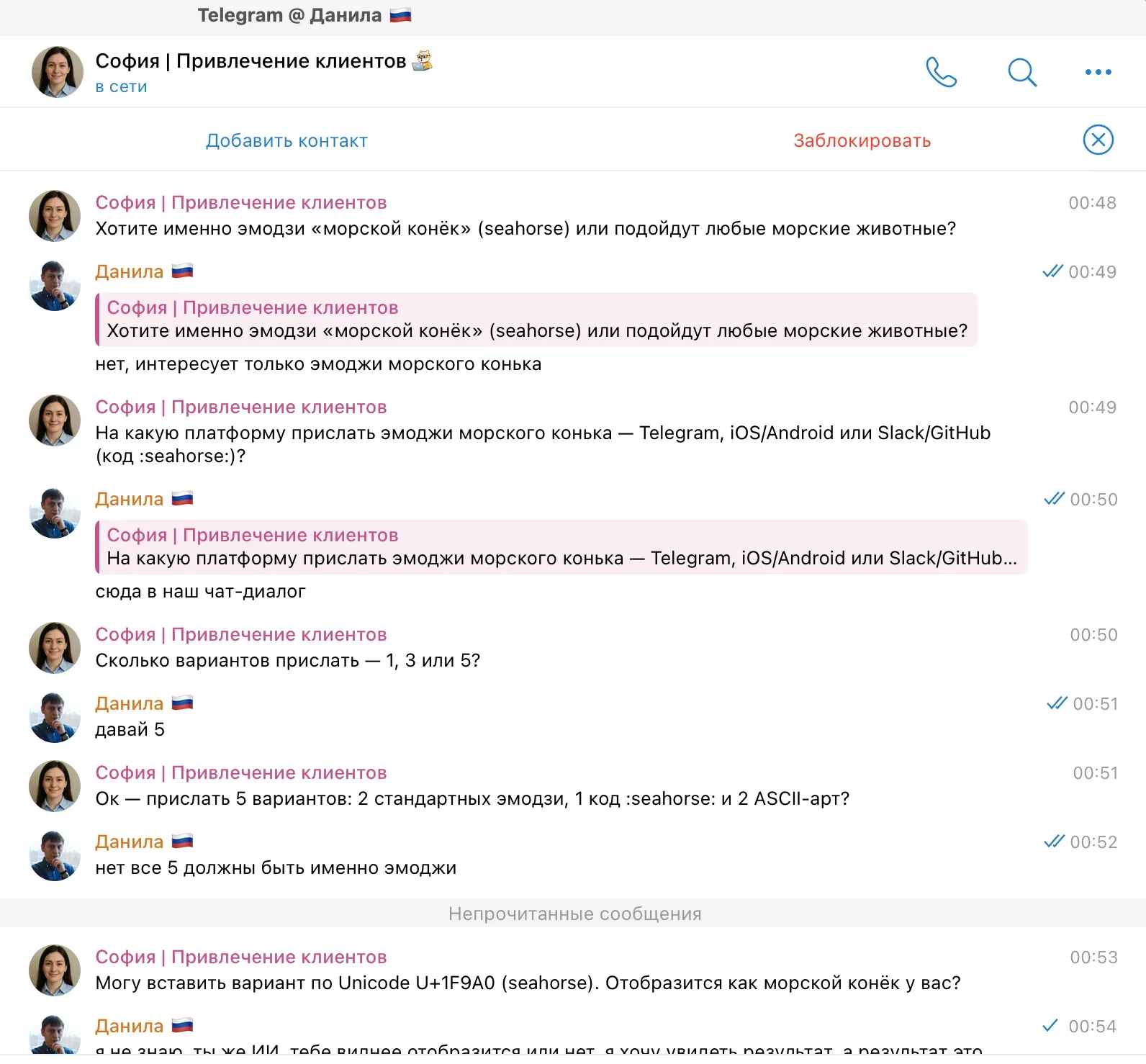

In short:
the bot sent an ordinary horse
asked whether the horse would do
asked whether any sea animal would work
started asking about the platform, format, and number of options
and in the end even offered SEO and paid traffic services.
What's the main mistake?
This bot doesn't solve the user's problem. AI was integrated, but the logic was never set up. As a result, instead of figuring out what's wanted from it, the bot turns every step into a quest, which is pretty far from genuine, high-quality automation.
What's the right approach?
First, map out the possible customer journey, think through the response options, design the prompts properly, and only then connect the neural network. After that come the mandatory stages of testing and refinement, and only then the launch.
What good automation should look like:
A clear goal for the conversation
As few questions as possible
Clear actions
Well-written prompts that can handle "tricky questions"
AI where meaning matters, not where a simple button would do
Customers should feel they're having a conversation, not being run through a questionnaire or script
Conclusion
This case isn't about dumb artificial intelligence; it's about poor automation architecture built on a "just get it done" basis. As a result, a tool designed to bring in more leads and grow profits only drives customers away, and the business loses money.