In online marketing, if you don't engage the user in time, there is a high probability that he will leave and buy nothing or put the purchase on hold. A properly set up auto sales funnel will engage and retain your customers on its own. You can focus on sales, reduce time for processing requests and make the communication with your visitors more personalized. As a result, you'll increase conversions at every step and sales.
In this article we will tell you how autofunctions work and who they work for.
What is an autohopper and why do you need it?
Autofunnel sales is the automatic promotion of customers with the help of trigger messages, from the first entry in the bot to the purchase.
That is, autofunnel independently without human resources promotes all users to purchase - whether it's 500 per month, or 5 million. With autofunnel, when traffic increases, you don't need to hire more employees to work with visitors - everything is done automatically.
It helps to:
Increase revenue per customer;
retain clients;
increase total revenue;
reduce customer acquisition costs;
reduce customer churn;
optimize advertising costs.
Autofunnel allows you to increase sales without hiring additional employees. You only need to set up trigger messages for autofunnel, and then they will attract customers on their own.
Let's look at how an auto sales funnel works. A typical non-automated funnel from the viewpoint of customer readiness for purchase looks like this:
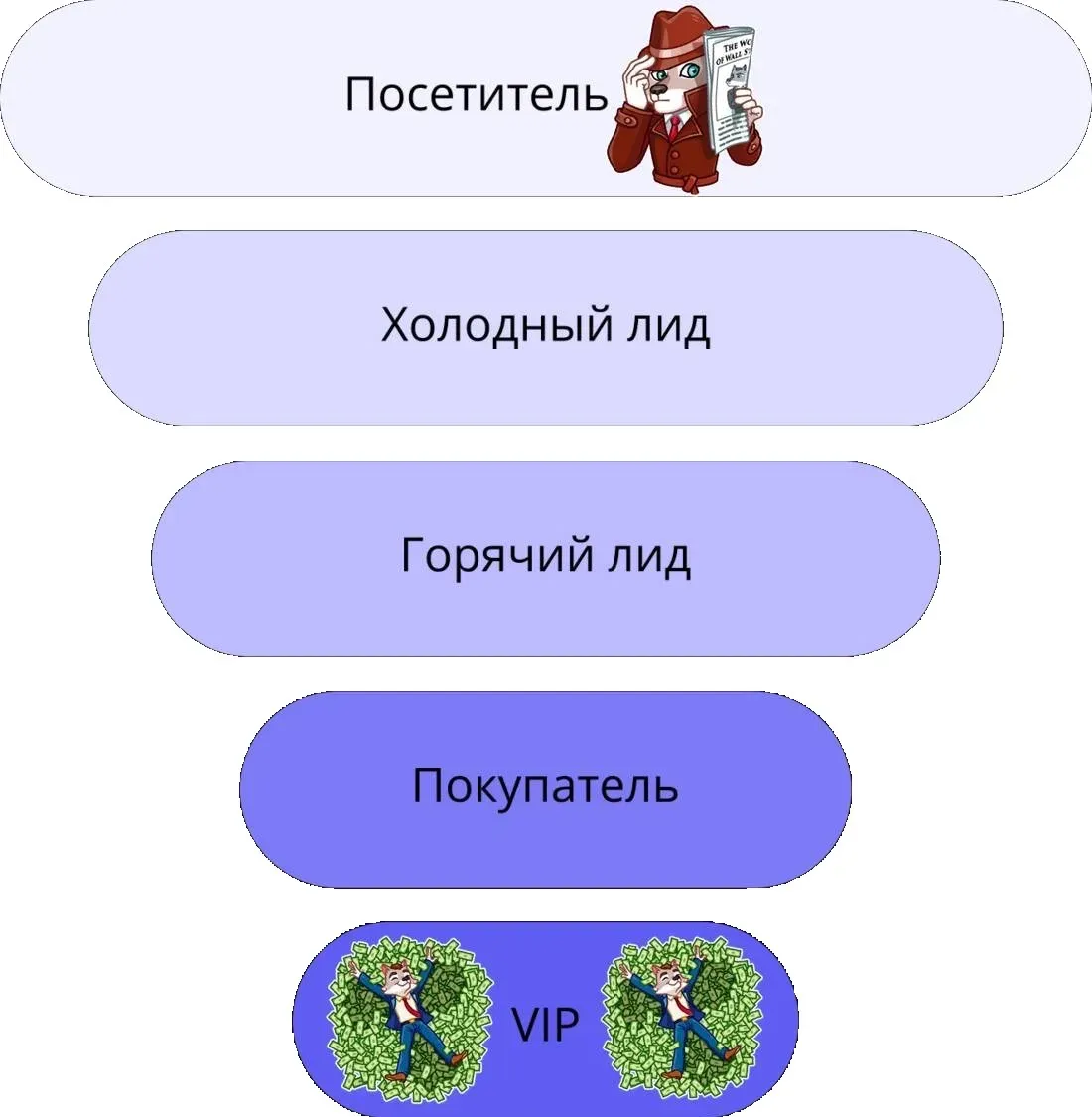
For example, in an online store, the customer's readiness to buy will be determined by the following steps:
Entered the bot.
Looked at the product card.
Added an item to cart.
Bought the product.
Came back to the store again.
With autofunnel, users receive relevant offers at every step with triggered messages and thus move towards purchases.
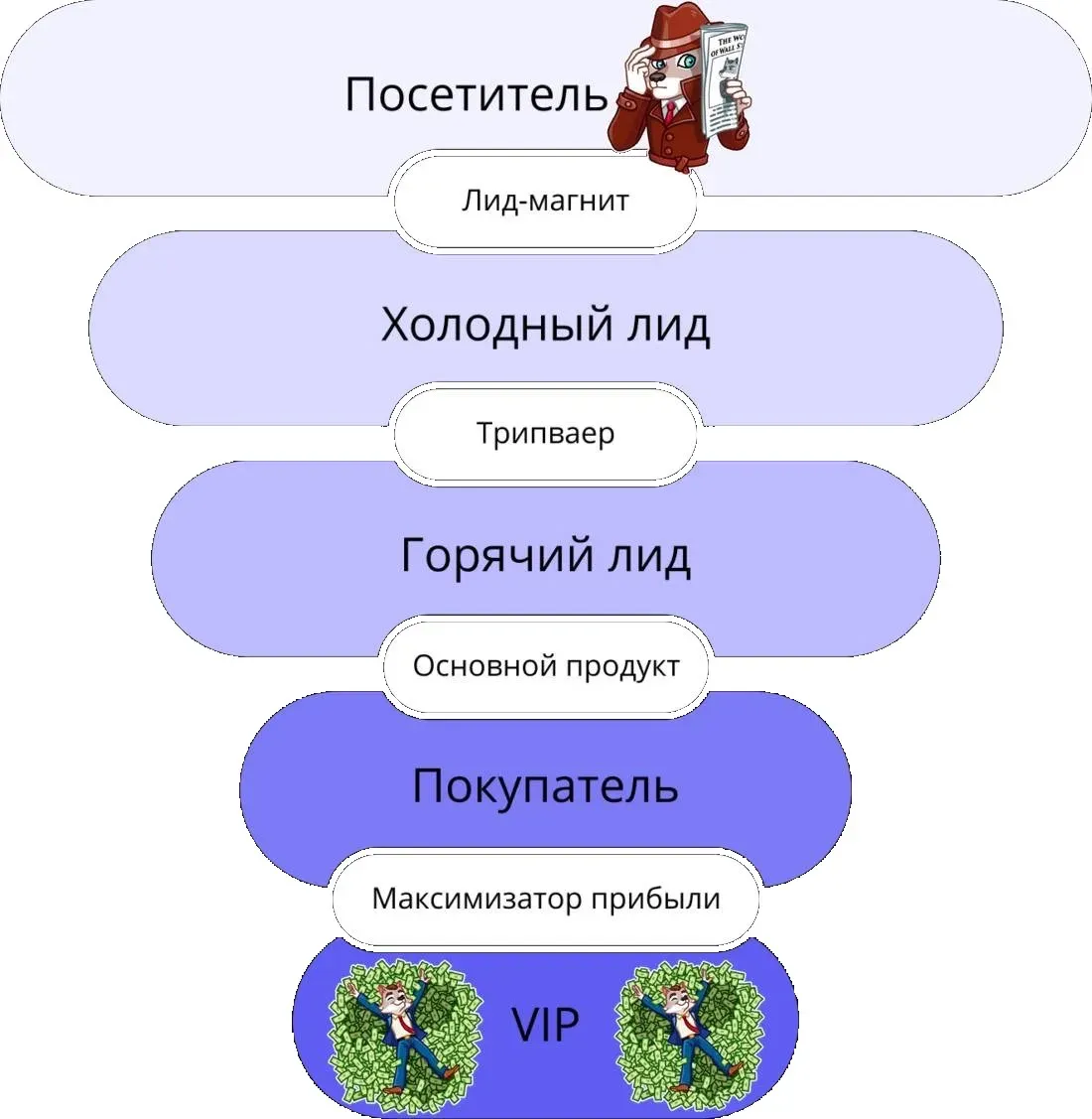
An automated sales funnel reduces conversion losses at each step.
Who are suitable for automated sales funnels
Automated sales funnels are suitable for established online businesses in the growth stage and above in the B2B and B2C spheres:
online retailers;
product companies - online services or software development;
online schools;
info-business;
services.
How to create an autofunnel
To create an autofunnel you will need the following elements, which you will then combine into an overall script:
lead magnets - free materials that a company gives you in exchange for an email;
trial - a free trial period if you are creating an autofunnel for an online service;
tripwire - part of a product or service at a low price - if you are creating an autofunnel for services, infobusiness and online services;
main product;
profit maximizers.
By offering them to users at certain stages, you can turn a simple visitor into a regular customer.
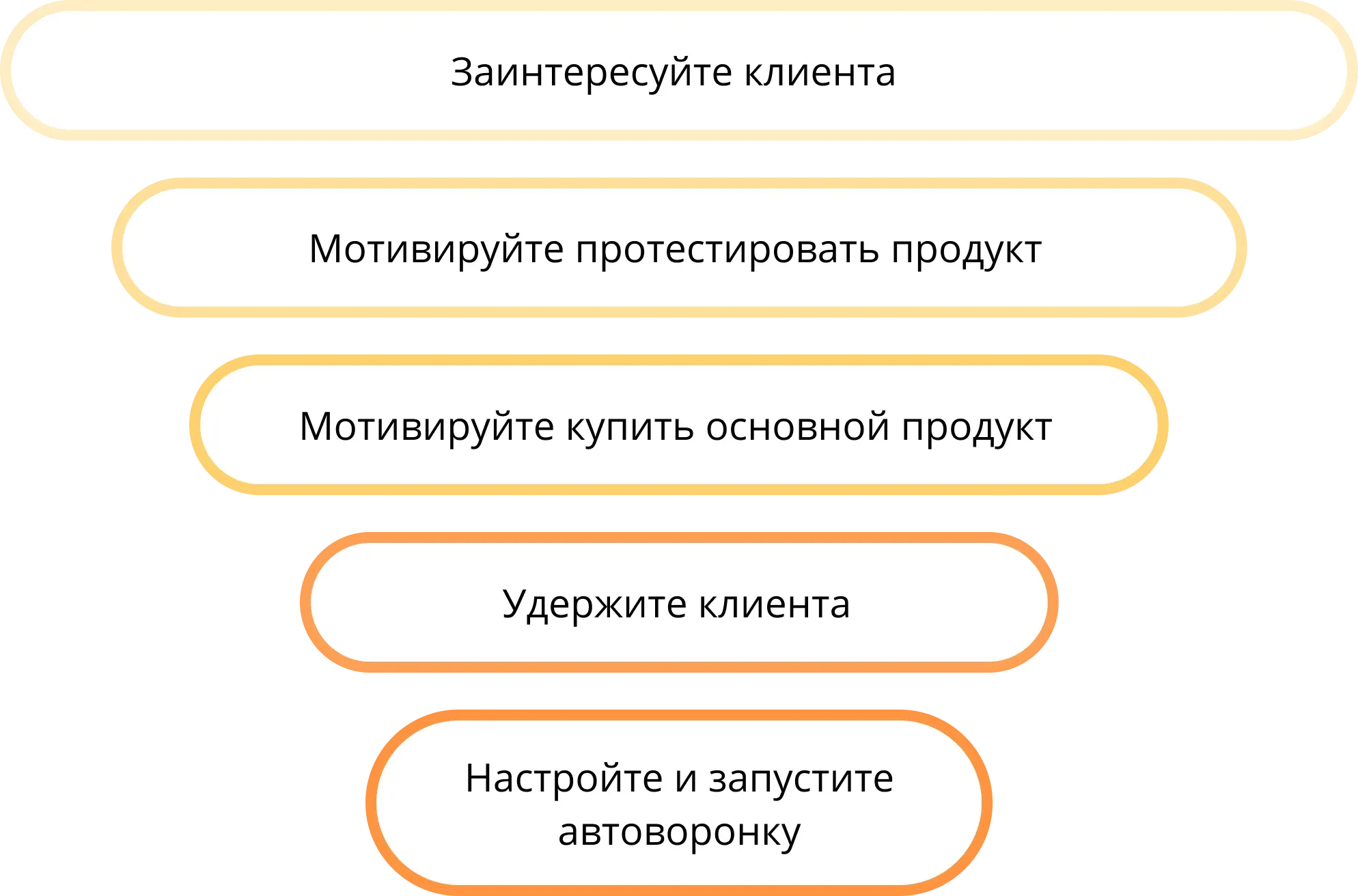
Step 1: Get customers interested
At the first step of the funnel users are "cold": they probably know nothing about you and don't want to buy yet. Your task is to get them interested and give them something useful.
The lead-magnet - free material, which the company gives in exchange for contacts - will help with that.
Options for lead-magnets:
checklist;
bonuses and discounts;
guide;
cheat sheet;
video lesson;
infographics;
selection of tools.
What's important to consider when creating a lead magnet:
it should be useful to your user;
it should be clear from the offer that a person will get after leaving contacts;
it can be received immediately after leaving contacts.
To make an effective lead-magnet:
analyze search queries on the topic of your product;
look at what your competitors are offering;
think about what problems customers are solving with your product and what can help them do it.
You don't need to try to solve a global problem - the core product can do that. The lead-magnet should cover a small but pressing need.
After the user has left contacts, you need to send him a message with the promised material. In the letter you can additionally talk about the benefits of your product and motivate them to stay and come back to the bot.
Step 2: Motivate to test the product - for online services, services, or infobusinesses
When the user is interested and leaves contacts, you need to lead him further down the funnel. At this stage, the person needs to be better acquainted with your product, give them the opportunity to test it. This is where you can help:
free trial period (trial) - for online services;
the tripwire - for services, infobusiness, and online services.
Free trial period, or Trials. Its duration depends on the transaction cycle, or the period needed for users to experience the value of the online service. The interface and functions of online services are difficult to understand quickly, so most often the free period to test them is 7-14 days.
Analyze the behavior of users in your product, talk to them. Find out what their average time to purchase is - that time will be the trial.
A tripwire is a part of a product or service at a low price.
To define a tripwire, take the main product, separate a part from it, and frame it as a stand-alone product. For example, on an online English course site, a tripwire could be a business English course with a 50% discount.
More examples of a tripwire:
a set of samples of 20 products for only 100 rubles;
a travel kit of ten items for the price of five;
subscription to the service at a price of 1 ruble for the first month;
registration for a webinar at a special price for the first three days.
Tripwire must be:
simple and clear to use;
affordable;
motivating to buy the main product.
The cost of the tripwire is determined by your niche. For example, if you sell a subscription service for $500 a month, offer a one-time consultation for $5. Be prepared that the tripwire will not bring you a tangible profit. His goals are:
attract the user with a low price;
let them get to know you;
turn a lead into a paying customer.
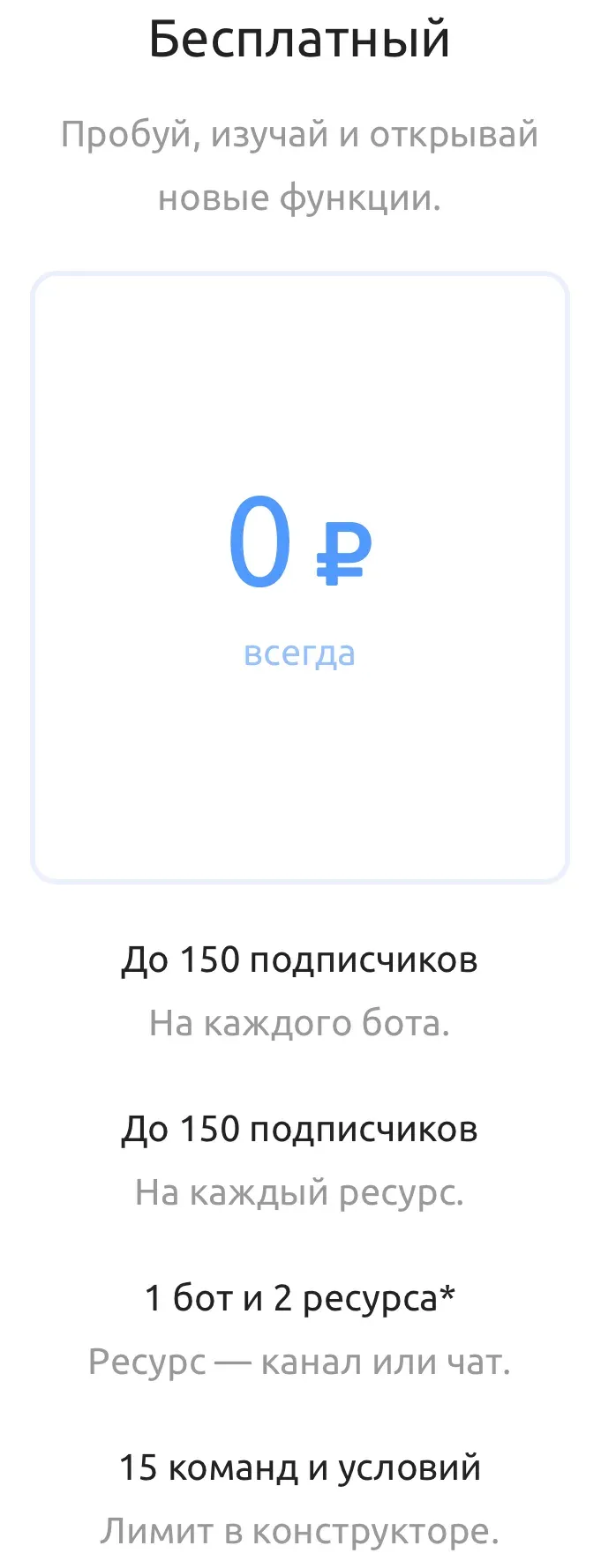
Trial and tripwire are interchangeable tools. Which one you choose depends on whether you're willing to let the product be tested for free and whether it will bring you sales faster and in larger quantities than the tripwire. You can test both and choose the right one.
Step 3: Motivate to buy the core product
The core product is the one around which your business is built and which you need an autofunnel to sell. The lead magnet, trial and tripwire were the ones the user was prepared to buy.
The core product is the most expensive in the chain. You can offer it as a whole or by individual tools, features, courses. For example, an online English school can offer courses in general or create an autofunnel for business English, technical English, conversational English and sell them more specifically.
General and spot autofunnels can be run simultaneously on different target segments.
Step 4: Retain the customer.
Selling your core product is a targeted step when creating an auto sales funnel, but it's not the last one. You're probably interested in getting customers to increase their average check and buy more from you.
Profit maximizers - related products to your main product - can help:
headphones and a computer mouse for your laptop;
service for setting up the service when you buy a subscription to it;
a personalized business English course after the basic course.
Clients can get interested right away and buy additional products or services. Or they can put it off for a while to test the main product, or just come back for more products later.
Offer related products or services at the first purchase and some time thereafter. Think about what might be useful to your customer. This way you will increase the likelihood that they will come back to you and bring in additional revenue.
Step 5: Set up and run your autofunnel
Frequent mistakes when building an autofunnel
1. Incorrect script. Analyze what actions users take, at what step they have difficulties, what makes them leave, where they stay for a long time. Based on that, create a script and test it. Do not be afraid to make mistakes, test different scenarios and keep the successful ones.
2. Poor setup of trigger messages. The same offers bore users. To avoid this happens, intelligently configure the display of messages on segments, triggers, the number of impressions.
3. Technical errors. The work of any messages should be carefully tested.
4. Lack of hypotheses. No one can say for sure whether a particular scenario will work in your case or not. Build hypotheses to improve autofunnels, test the effectiveness of each step of the autofunnel and message: measure readings before changes and after to see if your hypothesis worked.
5. Irrelevant offer in the offerer. When you want to gather contacts from users, it's important to offer something that will actually interest them. For example, in commercial niches, discounts work better than articles.
Success and great sales! 😎